Practical growth ideas for therapy practice owners
Clear, useful articles on client fit, intake, follow-up, marketing, visibility, websites, service pages, and simple practice growth systems.
Browse by growth bottleneck
Newest tips first
The latest articles appear below. Use the search block, dropdown, or category buttons to find a specific topic faster.
Is Psychology Today actually the problem?
Before blaming the directory, check whether the issue is the profile, the fit, the follow-up, the next step, or what happens after someone reaches out.

Before/After: Turn Your Therapy Website Navigation Menu Into a Fit Signal
Your therapy website navigation menu is not just a set of links. It can help nervous visitors understand whether your practice is a good fit and where to go next. This before/after example shows one small rewrite that makes the path clearer.

The Revenue Story Hidden Inside Website Analytics
Your website analytics do not need to become another overwhelming report. A simple 30-day snapshot can help you see whether visitors are finding your website, reaching the right pages, and taking the next step toward inquiry.

The Second Reply Matters More Than You Think
Some good-fit people disappear after the first response, not because they lost interest, but because life got busy, the next step felt unclear, or another practice replied first. This practical tip helps therapy practice owners write one warm second reply for open inquiries.

Your Intake Form May Be Too Long Too Soon
A long intake form can feel responsible, but it may also create friction before a potential client has even spoken with your practice. This article shows practice owners one simple fix: remove one question that does not need to be answered before the first conversation.
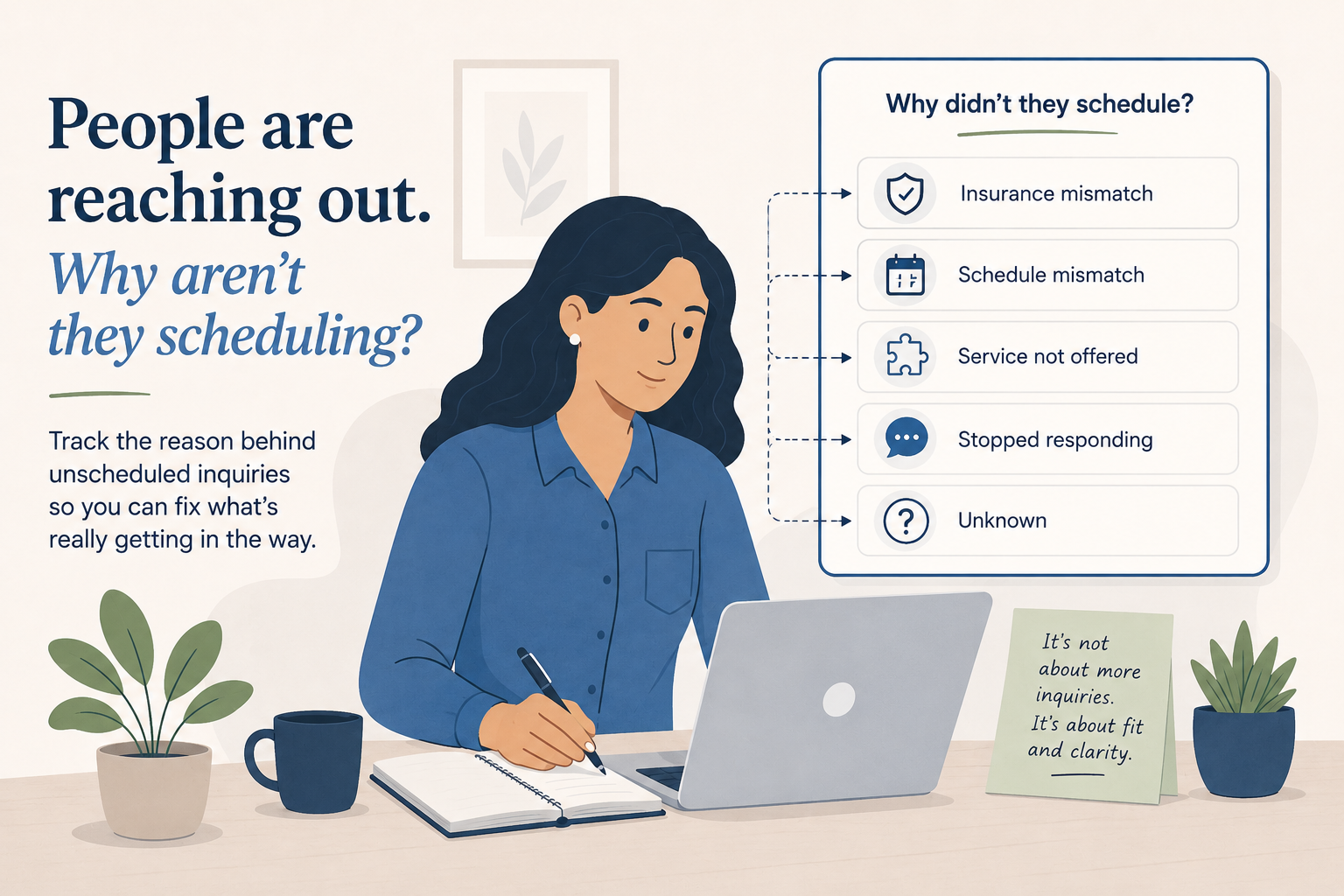
Why People Do Not Schedule After Reaching Out
If new client inquiries are coming in but too many people do not schedule, the problem may not be inquiry volume. It may be that the practice does not know why people are hesitating. This practical article shows therapy practice owners how to add one simple reason field to their inquiry tracker so they can spot patterns around fit, cost, timing, insurance, availability, and next steps.

Before/After: A More Specific Website Analytics Review for Therapy Practices
Your website analytics do not need to become another overwhelming dashboard. This before-and-after example shows how therapy practice owners can turn vague website data into a clearer review of where visitors may be getting stuck.

Therapist Words vs. Client Words: A Better Way to Write Practice Website Copy
Your therapy website copy may be clinically accurate and still miss the person reading it. This article shows one simple before/after rewrite that turns therapist words into clearer client-facing language.

Psychology Today profile tips for better-fit therapy inquiries
Your Psychology Today profile may not need a full rewrite. It may need a clearer opening. This article shows therapists and practice owners how to rewrite the first three lines of a directory profile so right-fit clients can quickly understand who you help, what good fit looks like, and what step to take next.

Does Your Therapy Website Explain What Therapy Feels Like?
Your website may list your services, fees, and specialties, but does it help a nervous visitor understand what therapy with you may actually feel like? This practical tip helps practice owners add one clear sentence that reduces uncertainty before intake.

Google Business Profile for Therapists: What to Fix First
A Google Business Profile can help local searchers find your therapy practice, but visibility is not enough if the profile is vague, outdated, or disconnected from your website. Before changing everything, fix the section that helps people understand who you help and what to do next.

The Data Story Behind Your Homepage Leak
Your therapy practice homepage may look professional and still lose right-fit clients before they reach out. This simple data story helps therapy practice owners check whether homepage clarity is creating a hidden leak.

Therapist Website Examples: What Practice Owners Should Actually Notice
Most therapist website example posts focus on colors, photos, and design style. But practice owners need to look deeper. This article shows what to notice when reviewing therapist website examples so you can see whether a site helps right-fit clients understand who the practice helps, what services are offered, and what to do next.
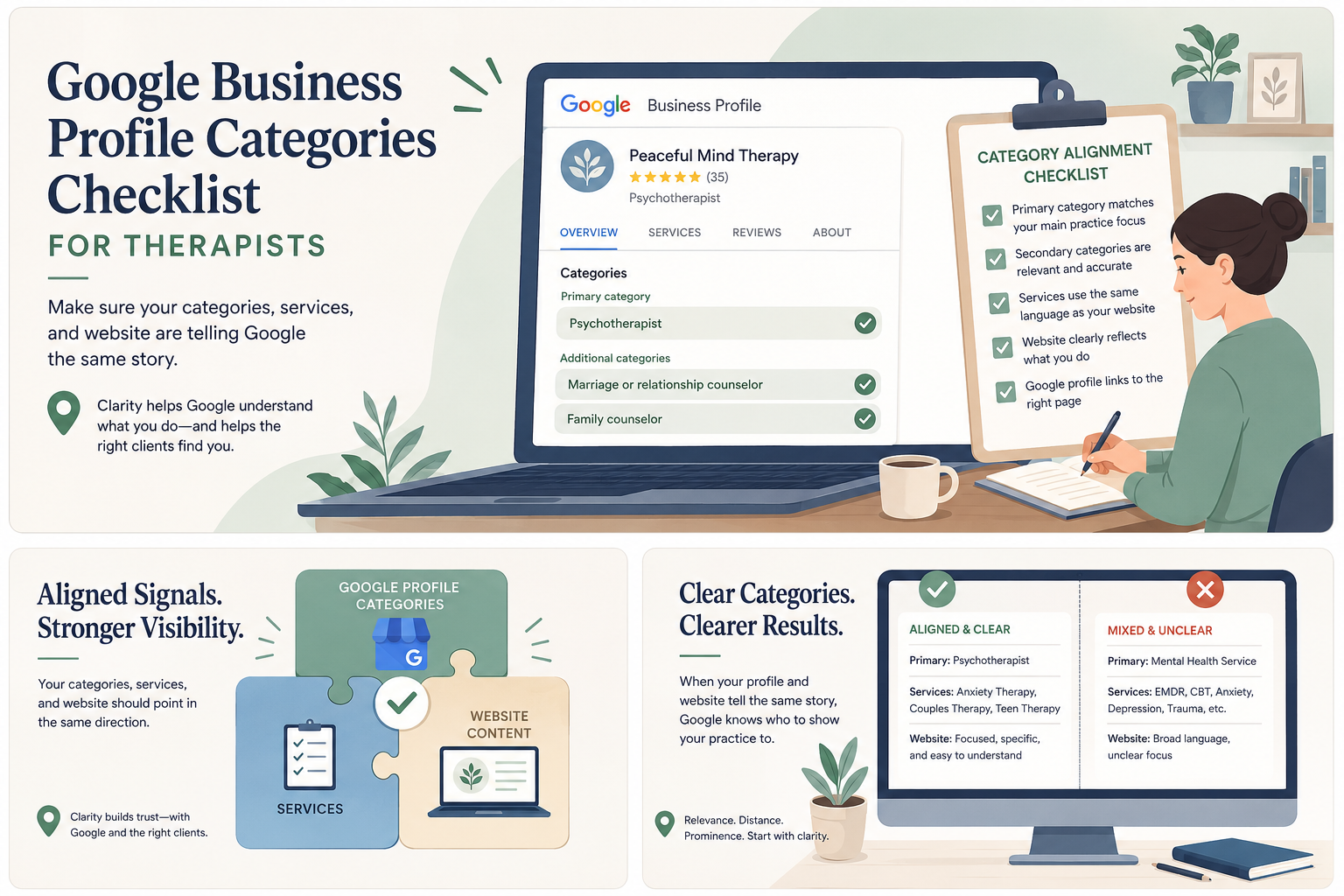
Google Business Profile categories checklist for therapists
Your Google Business Profile categories may seem like a small setting, but they help Google and potential clients understand what kind of practice you are. Use this checklist to see whether your primary category, secondary categories, services, and website language are all telling the same story.

Private Practice Marketing Plan for Therapists: A Simple One-Page Version
A private practice marketing plan does not need to be long or complicated. Use this simple one-page version to clarify who you help, where inquiries come from, what happens after someone reaches out, what to improve this month, and which number to check weekly.

When growth creates more overwhelm instead of stability
Growth can bring more inquiries, more clinicians, and more opportunities. But if too many decisions still depend on the owner, growth can also create more interruptions, confusion, and pressure. This article shows therapy practice owners how to identify one growth-related task that needs a clearer handoff.

Therapy Website Metrics: 6 Numbers to Check Each Month
Your therapy website numbers do not need to feel overwhelming. This article shows practice owners how to create a simple monthly website snapshot using 6 key metrics: visits, traffic sources, most viewed pages, engagement, contact page visits, and website inquiries.

The consult-to-intake number every therapy practice should track
A warm consult call is not always a clear consult call. This simple check helps therapy practice owners see how many consults become scheduled intakes, and where right-fit clients may be getting stuck.
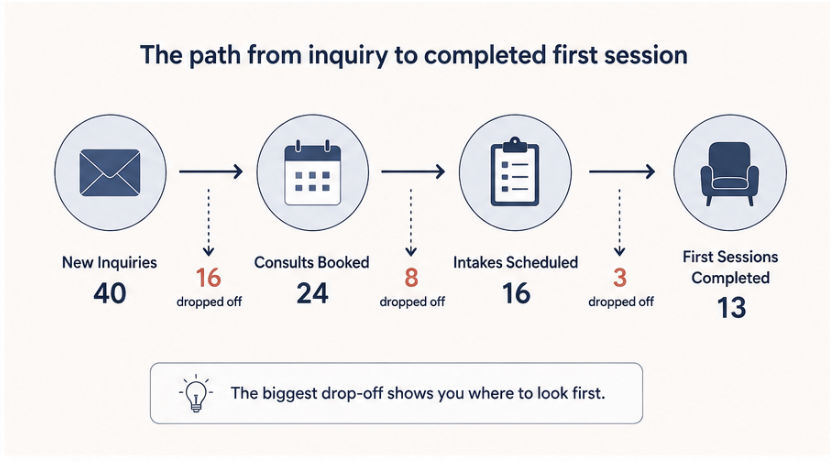
The drop-off number hiding between inquiry and intake
Your practice may already have enough interest. The real issue may be that too many people are slipping away between inquiry, consult, intake, and completed first session. This simple 30-day check helps practice owners see where the drop-off is happening before they spend more time or money trying to get more inquiries.

The small website sentence that builds trust with new client inquiries
New client inquiries do not only need a contact form. They need reassurance. One small response-time sentence can help website visitors understand what happens after they reach out.

Website Visitors but Not Enough Therapy Inquiries? Check This First
Your practice may already be getting attention. But if website visitors are not reaching out, the issue may be unclear fit, a weak next step, or unanswered questions on one important page. Here is a simple review practice owners can do this week.