Practical growth ideas for therapy practice owners
Clear, useful articles on client fit, intake, follow-up, marketing, visibility, websites, service pages, and simple practice growth systems.
Browse by growth bottleneck
Newest tips first
The latest articles appear below. Use the search block, dropdown, or category buttons to find a specific topic faster.
Is Psychology Today actually the problem?
Before blaming the directory, check whether the issue is the profile, the fit, the follow-up, the next step, or what happens after someone reaches out.

Are website visitors reaching your contact page?
Your website may be getting visitors, but that does not always mean people are reaching the place where they can contact you. This practical tip helps therapy practice owners compare website visits, contact page visits, and actual inquiries so they can spot hidden friction before changing their marketing.
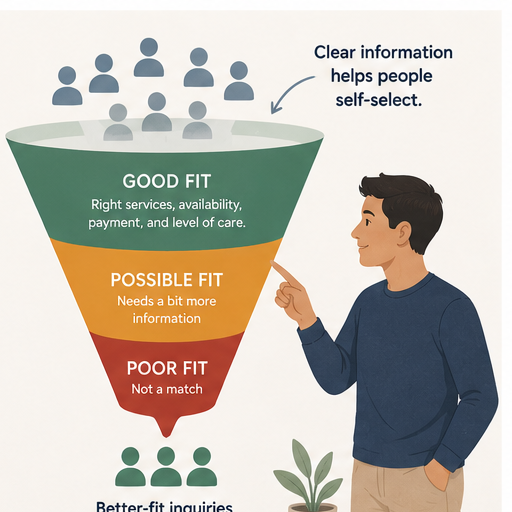
The poor-fit inquiry rate most therapy practices never count
A practice can look busy with new client inquiries and still be losing time to avoidable mismatches. This article shows therapy practice owners how to label inquiry quality for 30 days, spot the top reasons people are not a fit, and make one clearer change to reduce poor-fit inquiries before adding more marketing.

When fast follow-up feels hard to maintain
Fast follow-up matters, but it can be hard to maintain when inquiries arrive through phone, email, website forms, directories, and referral partners. This article gives practice owners one simple fix: create a saved first-response message that confirms the inquiry, explains the next step, and makes fees and fit clearer from the start.

Do your clinician bios help clients choose?
Clinician bios can look professional and still make it hard for clients to choose. For group practices, that can lead to uneven caseloads, more admin matching work, and too much owner involvement. This article gives practice owners one simple update to try this week: rewrite one clinician bio opening with “Clients often come to me when…”

Therapist marketing ideas: which ones should you ignore first?
Most lists of therapist marketing ideas give you more options. This article helps practice owners do the opposite: pause the idea that does not match the real bottleneck yet. Before posting more, running ads, joining another directory, or rewriting everything, check whether the issue is visibility, website clarity, inquiry quality, intake, referrals, or capacity.

Is Psychology Today still working for therapists? What lower views and referrals may really mean
Psychology Today may still have massive reach, but that does not mean every therapist is getting the same value from it. Here is how to understand the drop in profile views, website clicks, contacts, and referrals — and why practice owners should stop depending on one directory as their main growth system.

Marketing for therapists: what to fix before you spend more
Many therapy practice owners assume they need more marketing when inquiries slow down. But the real problem may be unclear messaging, confusing service pages, slow intake follow-up, vague fees, weak referral systems, or no simple tracking. Before spending more, review one current marketing source and ask what it is actually producing.

Your therapy practice homepage may be saying too much
Your homepage may be clear to you, but confusing to a new visitor. This article shows therapy practice owners one simple way to remove a competing message and make the next step easier to understand.

Before/After: make your service page sound less like a brochure
Your service page may be clinically accurate but still unclear to the person deciding whether to reach out. Try adding one simple “This may be a good fit if…” section to help right-fit clients recognize themselves faster.

When your website gets visitors but not enough inquiries
Your therapy practice may be getting website visitors, but not enough people are reaching out. Before spending more on marketing, review one high-traffic page for three things: clear fit, clear next step, and reduced hesitation.
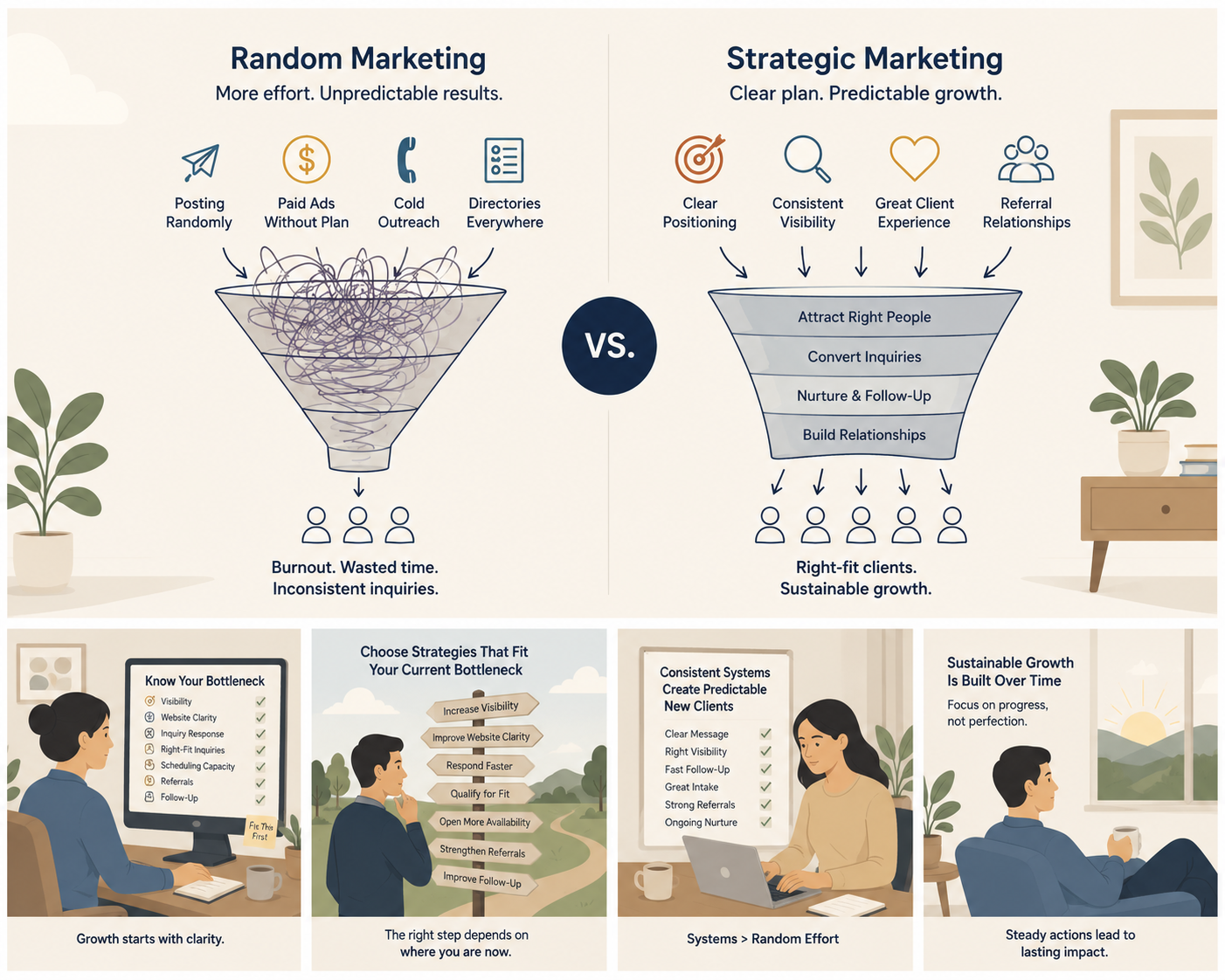
How to get more therapy clients without random marketing
Getting more therapy clients does not always mean doing more marketing. This guide helps therapy practice owners identify the real bottleneck between visibility, website clarity, fit, intake response, scheduling capacity, and referral flow so they can choose the next right action instead of guessing.

Do you know which marketing source leads to scheduled clients?
Client acquisition is one of the biggest challenges therapists face, but many practice owners still cannot clearly see which marketing sources lead to scheduled clients. Referrals, directories, Google, and social media may all play a role, but without simple source tracking, it is easy to confuse activity with results. This article shows practice owners one simple way to track inquiry sources for one month and review scheduled clients first.

Why “we help with anxiety and depression” may not be clear enough
Many therapy practices use phrases like “we help with anxiety and depression.” The phrase may be accurate, but it may not help a potential client recognize their own experience. This article shares one simple way to make broad service page language clearer, more human, and easier for right-fit clients to act on.

The referral question every practice owner should be able to answer
Referral partners may like and trust your practice, but still struggle to remember who is the best fit. This practical tip helps practice owners write one clear referral-fit answer they can use in emails, referral pages, networking conversations, and partner updates.

Local SEO for therapists: how to show up for right-fit local searches
Many therapy practices want more local inquiries, but their Google Business Profile, website, service pages, reviews, and location signals are not telling Google the same story. This guide explains local SEO for therapists in plain English and shows practice owners how to check whether their online presence supports the right local searches.

A simple way to make your Google Business Profile more useful
Your Google Business Profile may already exist, but is it helping right-fit clients understand your services? This simple tip shows therapy practice owners how to add clearer service descriptions so potential clients know whether the practice fits their needs and what step to take next.

Private practice marketing: a practical growth system for therapists
Private practice marketing is not just posting online, updating a directory profile, or asking for more referrals. For therapists, the strongest growth usually comes from a simple connected system: clear positioning, local visibility, referral relationships, website clarity, intake follow-up, and a way to review what is working.

Therapy website strategy: why visitors do not become inquiries
A therapy website can look polished and still fail to turn visitors into new client inquiries. Often, the issue is not the design. It is unclear fit, vague service pages, hidden next steps, unanswered fee or intake questions, and copy that does not help the visitor feel ready to reach out.

Your clinician bios may be too credential-heavy
Clinician bios often lead with degrees, modalities, and training. Those details matter, but nervous clients may need something simpler first: “Does this person understand what I’m dealing with?” Here’s one small bio update that can make your team page clearer.

Is Psychology Today actually the problem?
If your Psychology Today profile gets views but few new client inquiries, the platform may not be the real problem. The first fix may be profile clarity: who you help, whether you have availability, and what someone should do next.