Your clinician bios may be too credential-heavy
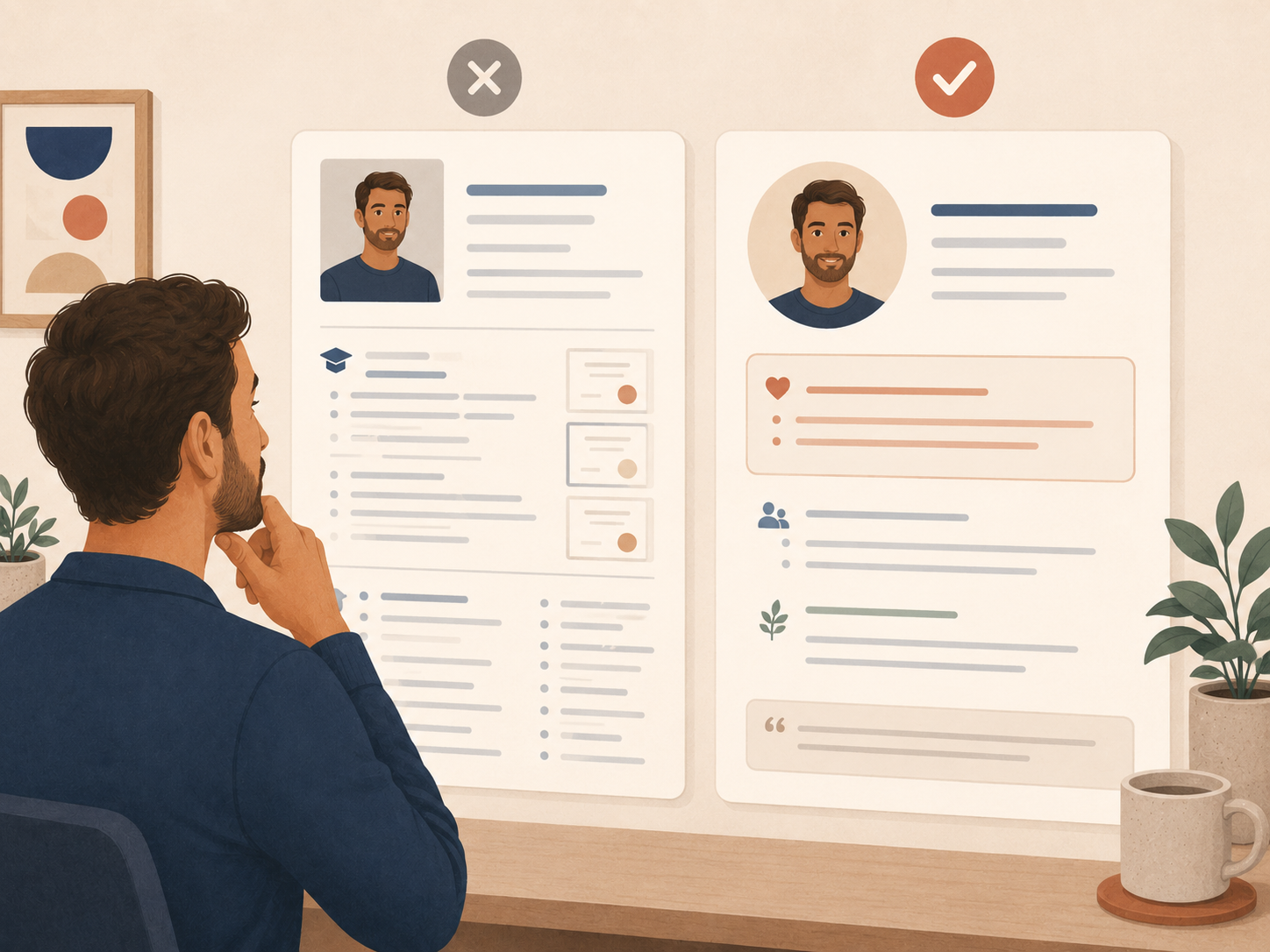
Your clinician bios may look professional, but do they help a nervous client choose who to contact?
Have you ever had a new client say, “I’m not sure who I should work with,” even though your website has a full team page?
Or maybe your admin team keeps getting the same question:
“Who would be the best fit for me?”
That question is normal. Choosing a therapist can feel personal, vulnerable, and confusing. But sometimes the website makes the decision harder than it needs to be.
A clinician bio should do more than list credentials. It should help the right person feel a little less lost.
Why this happens
Most bios are written from the clinician’s résumé, not the client’s question.
Many clinician bios start with licenses, graduate schools, certifications, trainings, and therapy approaches.
All of that matters. Credentials help build trust. They show that the clinician is qualified and serious about their work.
But for a nervous potential client, credentials may not be the first thing they need.
One useful data point
Choosing a provider often starts with comparing names, photos, specialties, and short bios online. Zocdoc’s 2025 “What Patients Want” report found that patients viewed an average of 21 providers before selecting a doctor.
That is not therapy-specific, but it points to a familiar problem for group practices: when clinician bios sound alike, clients have to work harder to understand fit.
Most therapists were trained to describe their qualifications. They were not always trained to write website copy that helps a client feel oriented.
The problem
When every bio sounds the same, clients have to guess.
From the practice owner’s point of view, credential-heavy bios may look professional. From the client’s point of view, they may blur together.
One bio says:
“I am a licensed clinical social worker trained in CBT, DBT, mindfulness, trauma-informed care, and attachment-based therapy.”
Another says:
“I am a licensed professional counselor with experience in anxiety, depression, trauma, life transitions, and relationship concerns.”
A third says almost the same thing.
This can create a few quiet problems.
- Clients may choose the owner because the owner feels safest or most visible.
- Newer clinicians may have openings but not enough right-fit inquiries.
- Admin staff may spend extra time explaining who does what.
- Referral partners may not know which clinician to send someone to.
- Clients may choose based only on availability instead of fit.
The issue is not that credentials are wrong. The issue is that credentials often show up before the client understands fit.
Related website fix
Clinician bios are not just staff profiles. They are part of the decision path on your website. For a fuller look at how bios, service pages, intake details, and next steps work together, read Therapy website strategy: why visitors do not become inquiries.
If your team page also needs to support local visibility, read Local SEO for therapists: how to show up for right-fit local searches.
The tip
Rewrite the first few sentences of one clinician bio.
Update one clinician bio so the first few sentences answer this question: “What kinds of clients feel understood by this clinician?”
That is the whole tip.
Do not rewrite your whole website this week. Do not redo every team bio at once. Do not remove credentials or make the bio overly casual.
Start with one clinician.
Look at the first three to five sentences of their bio. Before the reader sees the long list of credentials, specialties, or therapy approaches, help them understand the real-life situations this clinician is a good fit for.
Simple bio prompts
“Clients often come to [Name] when they are...”
“They may be feeling...”
“In sessions, [Name] helps clients...”
“Clients who work well with [Name] often appreciate...”
This is not about promising results. It is not about making big clinical claims.
It is about helping the person reading the page recognize themselves.
Example
Move client-fit language above the credentials.
Before
“Dr. Maya Rivera is a licensed psychologist with over 12 years of experience providing CBT, ACT, and trauma-informed therapy. She received her doctorate from a respected university and has worked in outpatient, school-based, and private practice settings.”
There is nothing wrong with this. It is credible.
But it may not help a client quickly decide, “Is this person for me?”
After
“Clients often come to Dr. Maya Rivera when they look calm on the outside but feel overwhelmed, tense, or constantly on edge inside. She works well with adults who are used to handling everything themselves and are starting to feel worn down by the pressure. In sessions, Maya offers a steady, practical space to slow things down, understand what is happening, and find a clearer next step.”
The credentials can still come next.
“Dr. Rivera is a licensed psychologist with over 12 years of experience and training in CBT, ACT, and trauma-informed therapy.”
Now the client sees both.
They understand the person. Then they see the qualifications.
For group practices
Your clinician bios are part of your intake system.
For group practice owners, clinician bios are not just website content. They are part of your intake system.
A strong bio can help clients make a more confident first choice. It can help admin staff explain fit. It can support newer clinicians who are still building visibility. It can reduce the pressure on the owner to be the default choice.
This is especially important when your practice has uneven caseloads.
Maybe one clinician is full and another has openings. Maybe clients keep asking for the founder. Maybe your website technically lists every clinician, but the bios do not give visitors enough useful information to choose between them.
When bios sound too similar, availability becomes the main matching tool.
That can lead to poor fit.
A clearer bio gives the client more than “this person has Tuesday at 3.” It gives them a reason to consider that clinician.
Keep the credentials
This is not an argument against credentials. Clients should be able to see licenses, training, specialties, and experience. The goal is to lead with what helps the client feel oriented.
Think of the bio in layers:
- First: “Do I feel understood?”
- Second: “Does this person work with my concern?”
- Third: “Do they seem credible and qualified?”
- Fourth: “What do I do next?”
Most clinician bios answer the third question first.
Try answering the first question first.
Quick check
Read the first five lines of one clinician bio.
Could a potential client quickly tell what kind of person might feel understood by this clinician?
Open one clinician bio on your website and read only the first five lines.
Look for three signs of clarity:
- The bio names a real-life situation the client may recognize.
- The bio explains what this clinician helps clients sort through.
- The bio sounds meaningfully different from the other bios on your team page.
If those first few lines mostly list degrees, modalities, trainings, or broad concerns like “anxiety, depression, and life transitions,” the bio may be asking the client to do too much work.
Do not rewrite the whole page yet.
Start with one opening sentence:
Simple starting sentence
“Clients often come to [Name] when...”
Then finish it in plain language a client might actually use.
For example:
“Clients often come to Jordan when they are tired of overthinking every decision, replaying conversations, or feeling like they cannot relax even when things are technically fine.”
That one sentence can make the bio feel more specific, more human, and easier to use.
A clinician bio does not need to do everything. It just needs to help the right person feel a little less lost.
Start with one opening paragraph. That small change may make your team page easier to use, your intake conversations clearer, and your clinician matching easier to manage.
Free resources
Use these before rewriting every page.
If one clinician bio feels unclear, there may be a bigger website clarity or local visibility issue behind it.
Before you redesign the team page or rewrite every profile, use one of these free Practice Growth Lab tools to check where right-fit clients may be getting stuck.
- Therapy Practice Website Scanner: check whether your website helps right-fit clients understand who you help, how intake works, and what to do next.
- Therapy Practice Local SEO Mini-Report: review local visibility, service page clarity, Google Business Profile gaps, intake friction, and practical next steps.
Use the website scanner if your team page, service pages, or intake details feel unclear. Use the local SEO mini-report if people in your area may not be finding the right service or clinician page in the first place.
Choose one under-booked clinician and rewrite only the first three sentences of their bio before changing anything else.
Related Reading
If your clinician bios look professional but do not help clients choose, these may help:
