Practical growth ideas for therapy practice owners
Clear, useful articles on client fit, intake, follow-up, marketing, visibility, websites, service pages, and simple practice growth systems.
Browse by growth bottleneck
Newest tips first
The latest articles appear below. Use the search block, dropdown, or category buttons to find a specific topic faster.
Is Psychology Today actually the problem?
Before blaming the directory, check whether the issue is the profile, the fit, the follow-up, the next step, or what happens after someone reaches out.
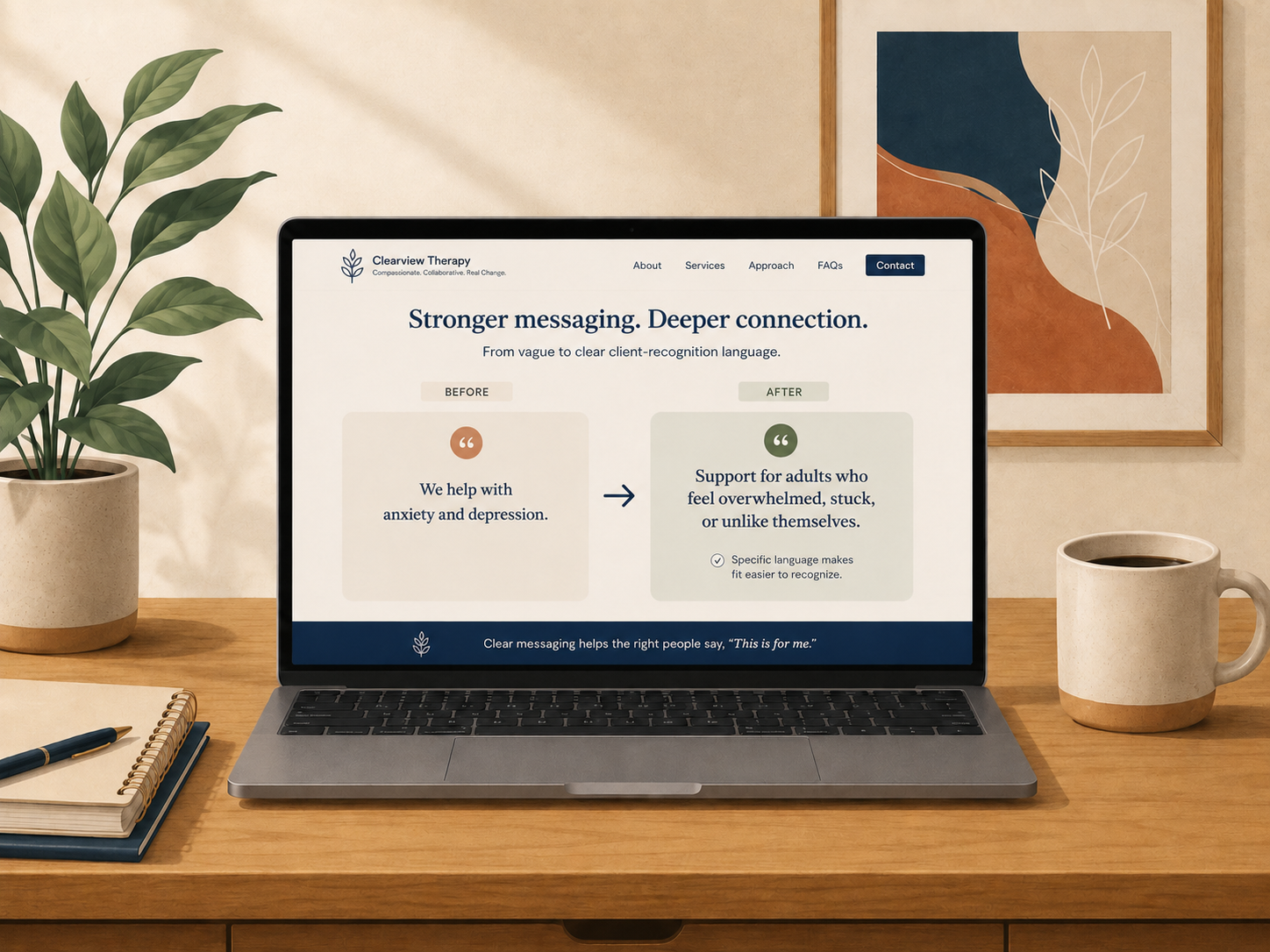
Why “we help with anxiety and depression” may not be clear enough
Many therapy practices use phrases like “we help with anxiety and depression.” The phrase may be accurate, but it may not help a potential client recognize their own experience. This article shares one simple way to make broad service page language clearer, more human, and easier for right-fit clients to act on.

Therapy website strategy: why visitors do not become inquiries
A therapy website can look polished and still fail to turn visitors into new client inquiries. Often, the issue is not the design. It is unclear fit, vague service pages, hidden next steps, unanswered fee or intake questions, and copy that does not help the visitor feel ready to reach out.

Your clinician bios may be too credential-heavy
Clinician bios often lead with degrees, modalities, and training. Those details matter, but nervous clients may need something simpler first: “Does this person understand what I’m dealing with?” Here’s one small bio update that can make your team page clearer.

Not every website visitor is ready to book
Not every website visitor is ready to schedule therapy. Some are still trying to understand what they are feeling, what kind of help they need, or whether therapy is the right next step. Here is one simple way to make one service page clearer this week.

When therapy clients start comparing options, is your website helping them choose?
Potential clients are not always deciding whether therapy matters. Often, they are deciding which practice, service, or clinician feels like the right next step. If your website is warm but vague, they may keep comparing options instead of reaching out. This article shows one simple section to add to a service page this week: “This may be a good fit if…”

Ready-to-book clients still need a clear next step
Some therapy practice website visitors are already close to reaching out. But if the next step feels buried, unclear, or too effortful, they may pause and never contact the practice. This article gives practice owners one simple audit to make service pages easier to act on.
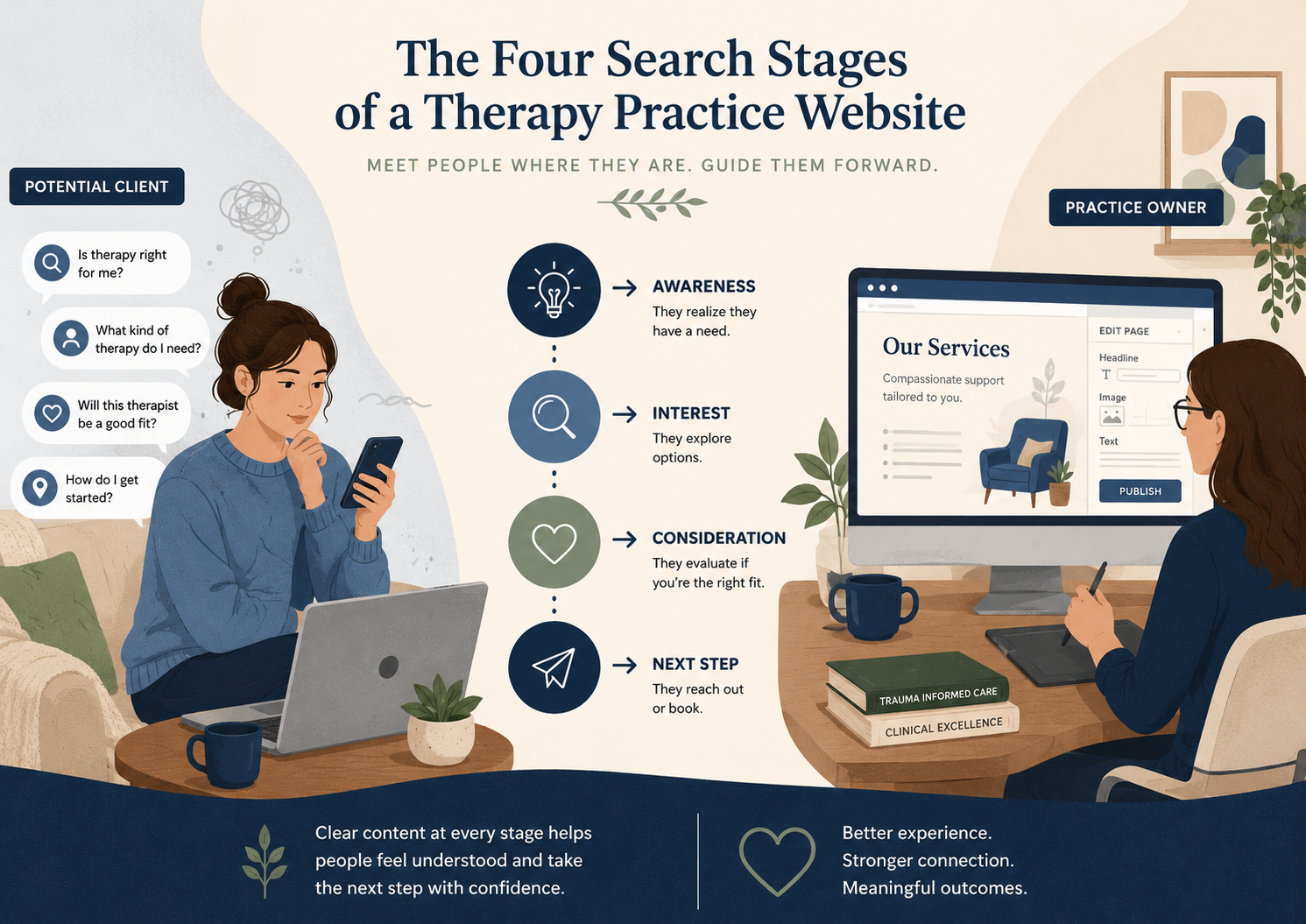
The four search stages your practice website might be missing
Most practice websites are written for people who are ready to book. But many potential clients arrive earlier in the search process. Here is a simple way to check whether one service page supports the full path from “What is going on?” to “How do I reach out?”

Your contact page is part of the intake process
Your contact page is not just a form. It is often the first step in your intake process. One small “what happens next” section can help potential clients feel less unsure, reduce repeated questions, and make the next step easier to take.

The page most therapy practices forget to update
Your fees, insurance, and availability details may seem small, but they shape how new clients understand fit before they reach out. This simple monthly check can reduce confusion, repeated admin questions, and missed opportunities.
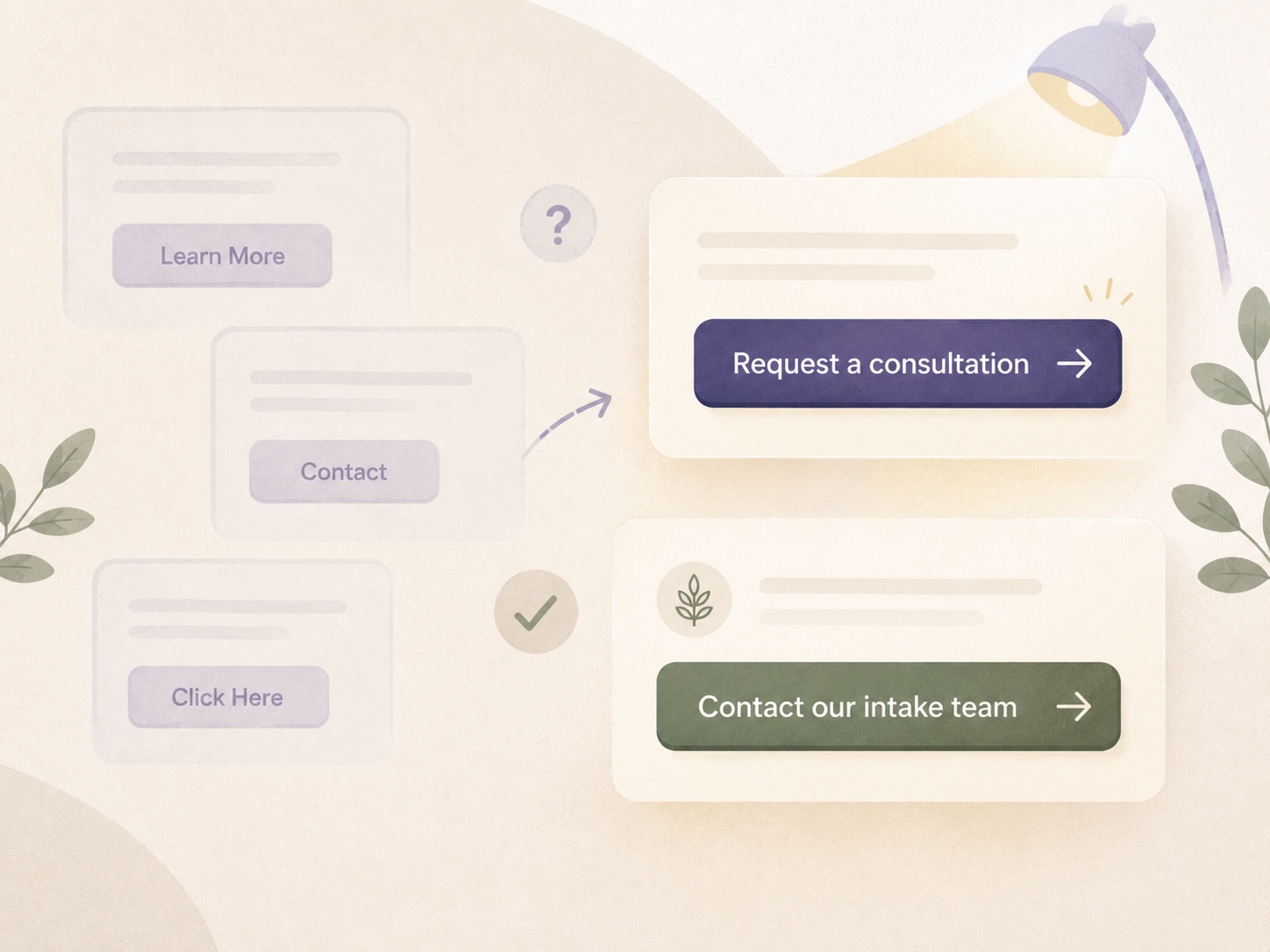
Your website’s next step may be too hard to find
Your website may look polished and still leave potential clients unsure what to do next. This quick homepage check helps therapy practice owners spot one common growth leak: a next step that is too hard to find on mobile.
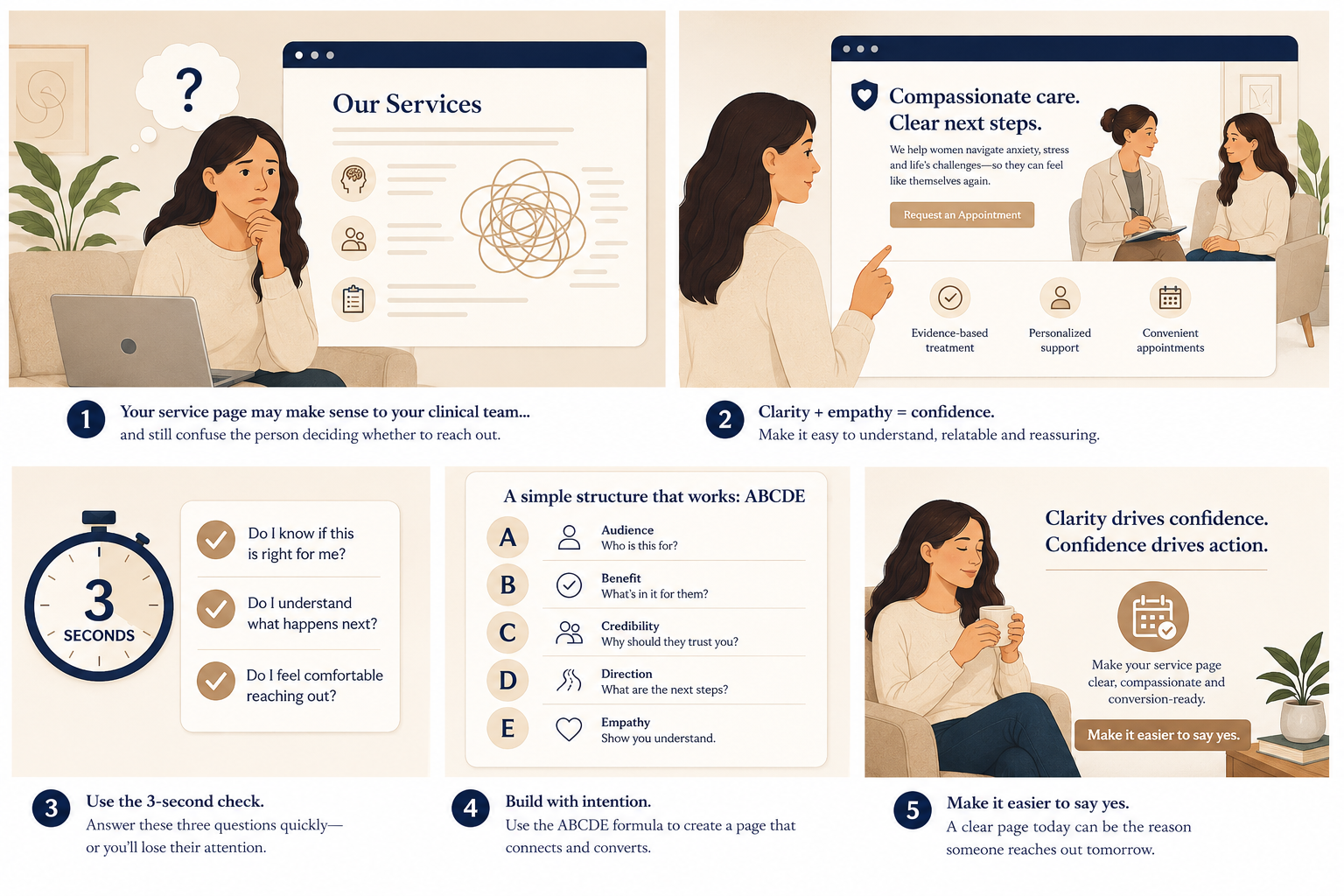
The service page test most practice owners skip
A service page can sound clear to your team and still leave potential clients unsure if the practice is right for them. This simple test helps practice owners spot confusing language, vague service descriptions, and missing next steps before changing the whole website.