Private Practice Marketing Plan for Therapists: A Simple One-Page Version
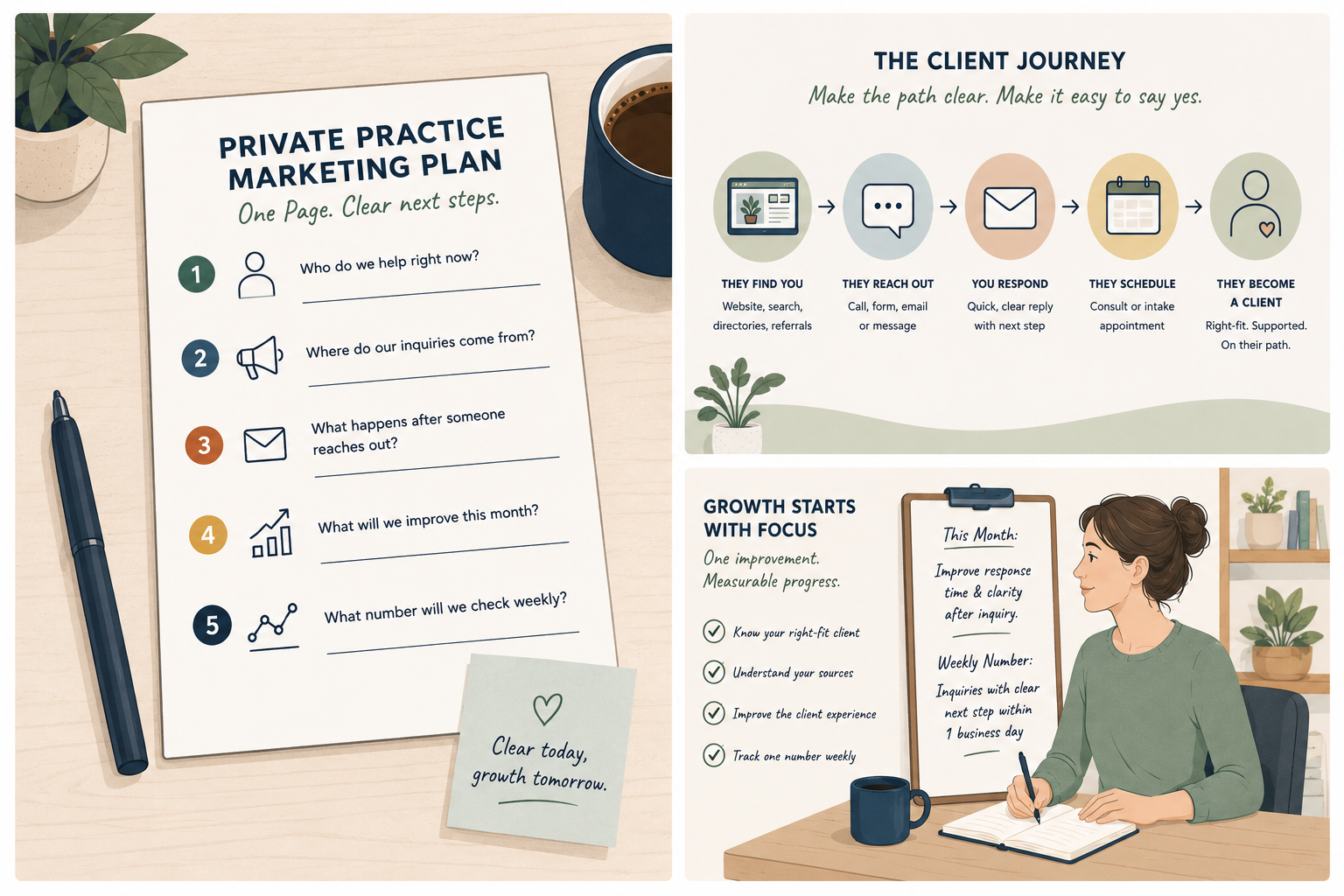
Your private practice marketing plan does not need to be a long document. It needs to help you see what is working, what is unclear, and what to fix next.
Have you ever thought, “We probably need a marketing plan,” and then immediately felt tired?
That reaction makes sense.
Most therapy practice owners were not trained to build business plans, marketing calendars, referral systems, website paths, intake workflows, and tracking dashboards. In fact, SimplePractice’s 2025 private practice report found that 43% of providers reported zero hours of formal business training during their careers.
At the same time, new clients still need a way to find you, understand whether the practice is a fit, and know what to do next.
That is why a one-page marketing plan can be more useful than a complicated strategy document.
A simple marketing plan should lower owner overwhelm, not create more tasks for the owner to manage.
The problem
Most marketing plans are too broad for the decision you need to make this week.
A formal marketing plan can sound like something that needs audience research, brand strategy, competitor analysis, content calendars, advertising plans, referral campaigns, social media schedules, website analytics, and monthly reports.
Those things can matter at the right time.
But when a practice owner is already carrying clinical work, team questions, intake problems, billing decisions, referral relationships, and home life, a big marketing plan can become one more thing that sits unfinished.
The owner does not need more pressure.
The owner needs a clear operating view.
Where are inquiries coming from? Are they the right inquiries? Are referral partners sending good-fit clients? Does the website explain the next step? Are people hearing back quickly? Which clinician or service needs more visibility? What should be improved first?
That is the point of a one-page private practice marketing plan.
It is not meant to capture every possible marketing idea. It is meant to help you stop guessing.
Private practice marketing works best when it is treated as a connected system: visibility, referrals, website clarity, intake, follow-up, and owner time all affect whether right-fit clients move forward.
If one part is unclear, adding more marketing activity may simply add more noise.
The tip
Fill out a one-page marketing plan with only five sections.
Do not start with every tactic you could try.
Start with the five questions that help you make better growth decisions.
-
1
Who do we help right now?
Write one plain-English sentence. Not every client you could help. Not every diagnosis you treat. One clear description of the right-fit client, service, or situation you want the practice to be known for right now.
-
2
Where do our inquiries come from?
List your main sources: referrals, Google, directories, website, social media, past clients, schools, physicians, community partners, or something else. Heard’s 2026 report found that therapists commonly rely on referrals, word of mouth, and online directories, so it is worth knowing which sources are actually producing scheduled clients for your practice.
-
3
What happens after someone reaches out?
Write the real path. Do they call, fill out a form, email, or message through a directory? Who responds? How quickly? What next step do they receive? If this is unclear, read Do you need more marketing—or better intake follow-up?
-
4
What will we improve this month?
Choose one improvement. One. Not a full website rewrite, referral campaign, social media plan, and intake overhaul at the same time. Pick the area most likely to reduce confusion this month.
-
5
What number will we check weekly?
Choose one simple number: new inquiries, scheduled consults, intakes booked, source of scheduled clients, open clinician slots, or unanswered inquiries. The goal is not perfect tracking. The goal is to notice patterns before revenue drops.
Your one-page plan can be this simple:
1. We are focusing on helping: ________________________________
2. Our best inquiry sources right now are: ______________________
3. After someone reaches out, the next step is: _________________
4. This month, we will improve: _______________________________
5. Every week, we will check: _________________________________
That is enough to start.
A one-page plan helps you avoid the most common marketing trap: changing tactics before you understand the bottleneck.
Maybe your practice does need more visibility. Maybe your Google Business Profile, service pages, or local search presence need work. Maybe your referral partners need a clearer answer to who they should send to you right now.
But maybe people are already reaching out, and the real issue is slow follow-up, unclear fees, poor-fit inquiries, confusing clinician bios, or an intake path that depends too much on the owner.
Your one-page plan helps you see the difference.
Example
What this looks like in a therapy practice.
A group practice wants to fill two newer clinicians.
The owner’s first thought is, “We need more marketing.”
But instead of launching several new activities, the team fills out the one-page plan.
Who we help right now: Adults dealing with anxiety, burnout, and relationship stress who want weekly outpatient therapy and can attend daytime or early evening appointments.
Where inquiries come from: Mostly referrals, Psychology Today, Google, and a few past-client word-of-mouth inquiries.
What happens after inquiry: Website forms go to the admin inbox. Phone calls go to voicemail during sessions. Directory messages are checked when someone remembers. The owner answers harder fit questions.
What we will improve this month: Create one response-time standard and one short message that offers current openings with the newer clinicians.
What number we will check weekly: New inquiries that received a clear next step within one business day.
The practice does not need a 20-page marketing plan to see the first fix.
It needs a clearer handoff after someone reaches out.
That does not mean visibility is unimportant.
It means visibility is only useful when the rest of the path can support it.
For a broader view of how this fits into client acquisition, read How to get more therapy clients without random marketing. If you are already considering spending more, read Marketing for therapists: what to fix before you spend more.
Free resource: If you want to compare visibility, intake, capacity, pricing, and follow-up in one place, use the Practice Growth Calculator.
Free resource: If inquiries are coming in but not enough people are becoming scheduled clients, use the Inquiry-to-Intake Calculator.
Quick check
Which part of your marketing plan feels least clear?
Choose the answer that feels closest right now.
We are not clear enough about who we help right now.
We do not know which inquiry sources actually lead to scheduled clients.
We are not sure what happens consistently after someone reaches out.
We have too many possible improvements and do not know what to fix first.
We do not have one number we review every week.
Your answer is your starting point.
If you picked A, clarify the right-fit client or service.
If you picked B, track the source of the next 10 scheduled clients.
If you picked C, write down the intake path from the client’s point of view.
If you picked D, choose one monthly improvement instead of five.
If you picked E, pick one weekly number and review it every Friday.
A private practice marketing plan does not have to feel corporate, complicated, or disconnected from real practice life.
The best first version is simple enough to use.
One page. Five sections. One improvement this month.
Want help turning your one-page plan into the right next steps? A Practice Growth Lab Strategic Review can help you find the bottleneck and choose your next 10 growth priorities.
