The small website sentence that builds trust with new client inquiries
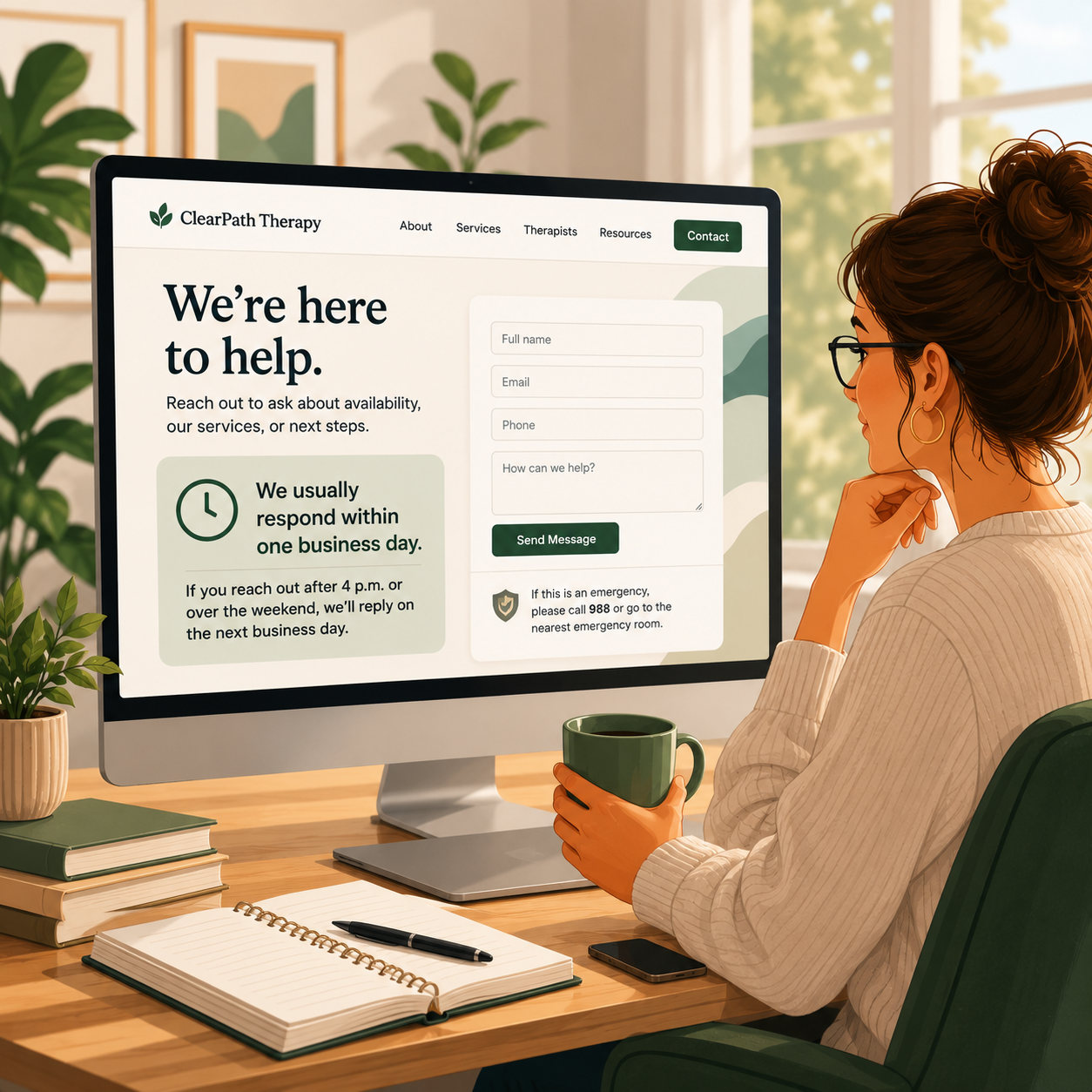
A clear response-time sentence can reduce uncertainty before a new client ever talks to your team.
Have you ever looked at your therapy practice website and thought, “It looks good, but people still seem to hesitate before reaching out”?
The contact button is there. The form works. The phone number is listed. Maybe your service pages are clear enough. Maybe your clinician bios are updated.
But there may still be one small gap.
After someone clicks “Contact,” do they know when they will hear back?
The trust-building sentence is simple: “We usually respond within one business day.”
Why this matters
Small details shape the first impression
That one detail can matter more than it seems.
SimplePractice’s annual state of private practice report found that 43% of providers reported receiving zero hours of formal business training. That helps explain why small client-facing business details can get missed. Most practice owners were trained to care for clients, not to design every step of the inquiry experience.
And while therapy is not the same as sales, timing still affects human behavior. A lead response management study found that web-generated inquiries contacted within 5 minutes instead of 30 minutes had much higher odds of contact and qualification.
For therapy practices, the lesson is not “pressure people faster.” The lesson is simpler: when someone reaches out, uncertainty starts quickly.
The problem
The visitor is left guessing
A person who fills out your contact form is usually not casually browsing.
They may have been thinking about therapy for weeks. They may be worried about a child. They may be trying to find couples support before things get worse. They may be comparing several practices during a lunch break. They may already feel nervous about asking for help.
Then they submit the form.
And nothing tells them what happens next.
No response window. No note about business hours. No explanation of whether they should call too. No reminder that the form is not for emergencies. No clear next step.
From inside the practice, this can feel small.
You know your admin team usually replies within a day. You know the intake coordinator checks forms in the afternoon. You know the practice is closed on Fridays. You know voicemail is returned on business days.
But the website visitor does not know any of that.
What they may wonder
- “Did my message go through?”
- “Should I keep looking?”
- “Are they actually accepting new clients?”
- “Will I hear back today?”
- “Is this the right place to ask?”
That uncertainty can make a warm inquiry go cold.
The tip
Add one response-time sentence
Add one simple response-time sentence near every place someone can contact you.
Here is the simplest version:
“We usually respond within one business day.”
That is it.
Not a long paragraph. Not a full intake policy. Not a complicated explanation of your admin workflow.
Just one clear sentence that lowers uncertainty.
You can make it more specific if needed:
- “We review new inquiries Monday through Thursday and usually respond within one business day.”
- “If you reach out after 4 p.m. or over the weekend, we will usually respond on the next business day.”
- “Our intake team usually responds within one business day and will help you understand next steps.”
Important
The sentence must be true. Do not promise a response time your practice cannot consistently meet. A trust-building sentence only works if your process can support it.
Where to put it
Place it where people already reach out
Start with your contact page.
Place the sentence close to the form, not buried at the bottom of the page.
Contact page example
“Use the form below to request a consultation or ask about availability. We usually respond within one business day.”
Then add the same idea to your form confirmation message.
Instead of:
“Thank you. Your form has been submitted.”
Use:
“Thank you. Your message has been received. We usually respond within one business day.”
You can also add it to your voicemail greeting:
“Thank you for calling. Please leave your name, phone number, and a brief reason for your call. We usually return messages within one business day.”
This is especially helpful if calls often go to voicemail during sessions.
And if your practice receives inquiries through directories, referral pages, or online profiles, use the same response expectation there too.
The goal is simple: wherever someone reaches out, they should not be left guessing.
Example
What this looks like in real practice life
Imagine a parent looking for therapy for their teenager.
They find a local group practice. The website feels warm. The teen therapy page sounds relevant. There is a “Request a consultation” button.
They click.
The form asks for their name, contact information, insurance, and a short note.
Then they see this sentence:
“After you submit this form, our intake coordinator will review your request and usually respond within one business day. If this is an emergency, please call 988 or go to the nearest emergency room.”
That sentence does a few useful things.
- It confirms that a real person will review the request.
- It gives a realistic response window.
- It reduces the chance that the parent keeps refreshing their email.
- It makes the process feel more organized.
- It gives a safer direction for urgent situations without turning your contact form into crisis care.
Nothing about this is flashy.
But it builds trust because it answers the question the visitor is already asking:
“What happens after I reach out?”
Quick check
Can a new visitor answer these three questions?
Open your contact page and pretend you are a brand-new visitor.
What should I do next?
When will I hear back?
What should I do if I need urgent help?
If the answer is no, add one sentence this week.
Try:
“We usually respond within one business day.”
Then make sure it appears near the contact form, in the confirmation message, and anywhere else people reach out.
Trust is not only built through credentials, warmth, or polished design.
Sometimes trust is built when a person thinks, “Okay. I know what happens next.”
Want help finding where good-fit inquiries are getting stuck? A simple review of your website-to-intake path can make the next step clearer.
