Practical growth ideas for therapy practice owners
Clear, useful articles on client fit, intake, follow-up, marketing, visibility, websites, service pages, and simple practice growth systems.
Browse by growth bottleneck
Newest tips first
The latest articles appear below. Use the search block, dropdown, or category buttons to find a specific topic faster.
Is Psychology Today actually the problem?
Before blaming the directory, check whether the issue is the profile, the fit, the follow-up, the next step, or what happens after someone reaches out.
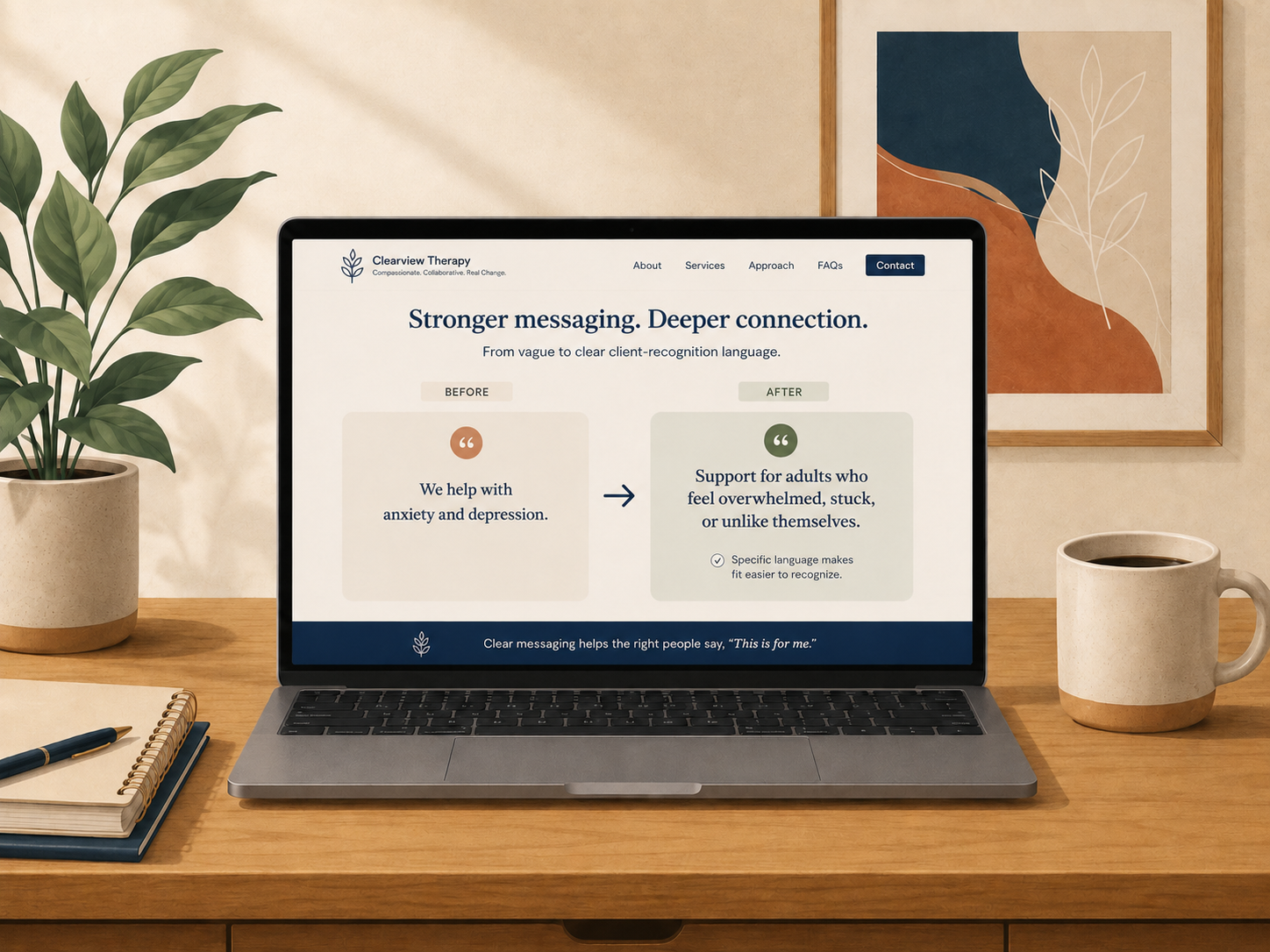
Why “we help with anxiety and depression” may not be clear enough
Many therapy practices use phrases like “we help with anxiety and depression.” The phrase may be accurate, but it may not help a potential client recognize their own experience. This article shares one simple way to make broad service page language clearer, more human, and easier for right-fit clients to act on.

Is Psychology Today actually the problem?
If your Psychology Today profile gets views but few new client inquiries, the platform may not be the real problem. The first fix may be profile clarity: who you help, whether you have availability, and what someone should do next.

When therapy clients start comparing options, is your website helping them choose?
Potential clients are not always deciding whether therapy matters. Often, they are deciding which practice, service, or clinician feels like the right next step. If your website is warm but vague, they may keep comparing options instead of reaching out. This article shows one simple section to add to a service page this week: “This may be a good fit if…”

The page most therapy practices forget to update
Your fees, insurance, and availability details may seem small, but they shape how new clients understand fit before they reach out. This simple monthly check can reduce confusion, repeated admin questions, and missed opportunities.

Why consult calls do not always turn into clients
Consult calls can feel warm and helpful but still fail to turn into scheduled clients. Before changing your marketing or lowering your fees, track consult outcomes for two weeks so you can see whether people are getting stuck around cost, timing, fit, or an unclear next step.

Are you getting inquiries from the wrong people?
More inquiries are not always better. If many people reach out but do not book, your practice may have a fit, pricing, schedule, or service clarity problem. Here is one simple way to track what is really happening before changing your marketing.
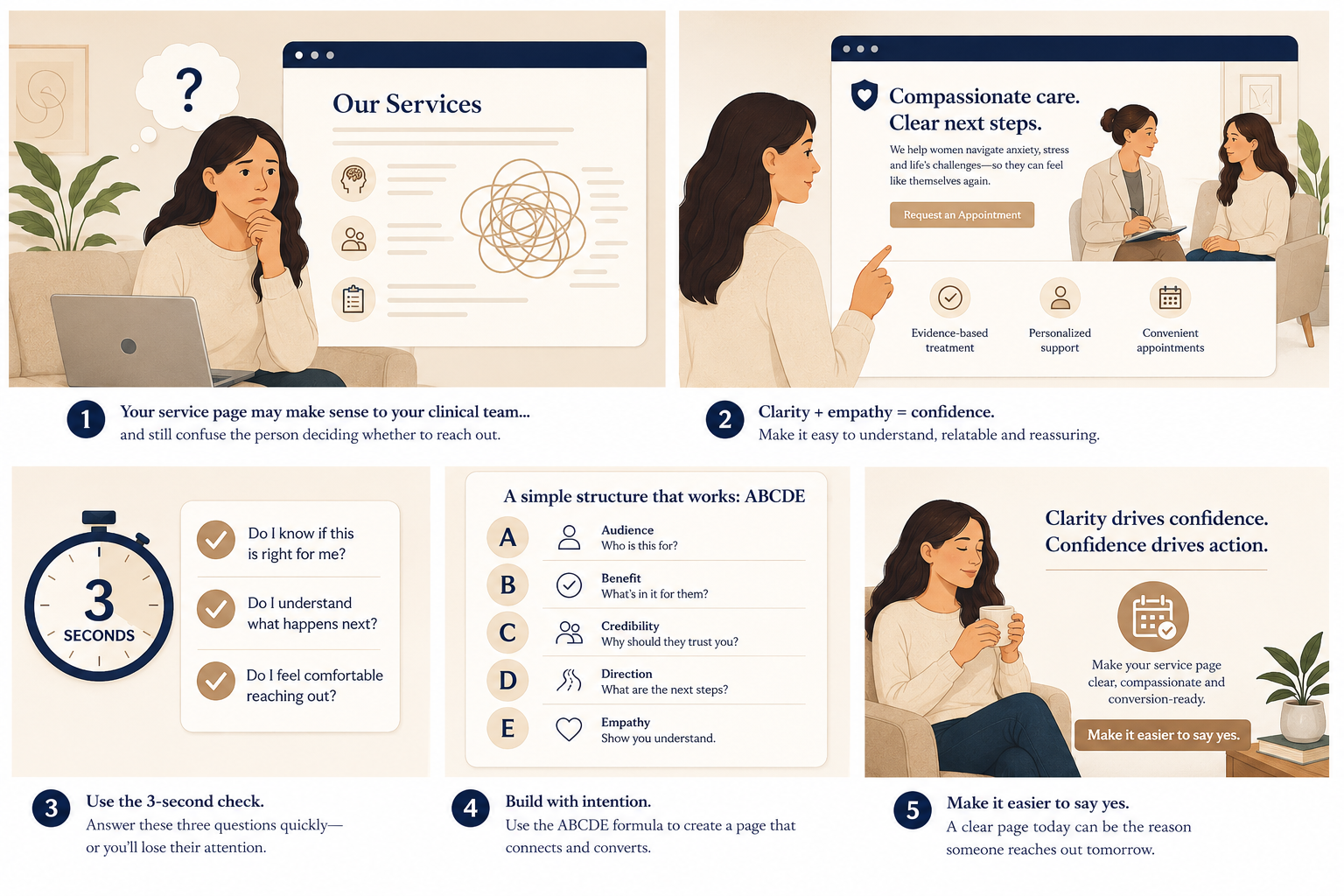
The service page test most practice owners skip
A service page can sound clear to your team and still leave potential clients unsure if the practice is right for them. This simple test helps practice owners spot confusing language, vague service descriptions, and missing next steps before changing the whole website.